The idea of approaching volcanoes through simulation has two roots: years of expeditions on active volcanoes, and the game From Dust, released in 2011, which had already put a living, erodible landscape in players’ hands.
From Dust ships. Three years of work on dynamic terrain, fluid, and lava simulation leave one question open : how far could this go ?
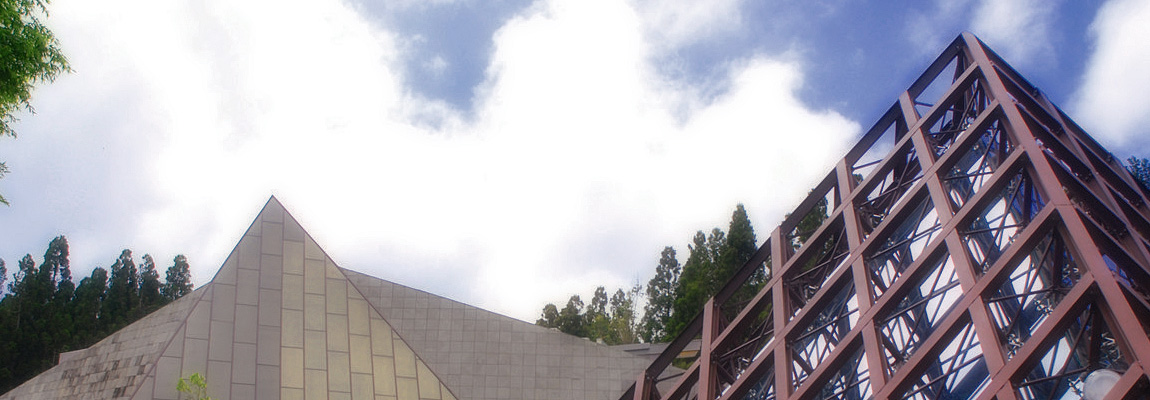
Patrice Huet, scientific director at the « Cité du Volcan » on Réunion Island, one of the leading volcano museums in France, is looking for a new kind of application for his visitors. At the same time François is a GPU programmer looking for a new teaching/simulation project. Right time, right place !
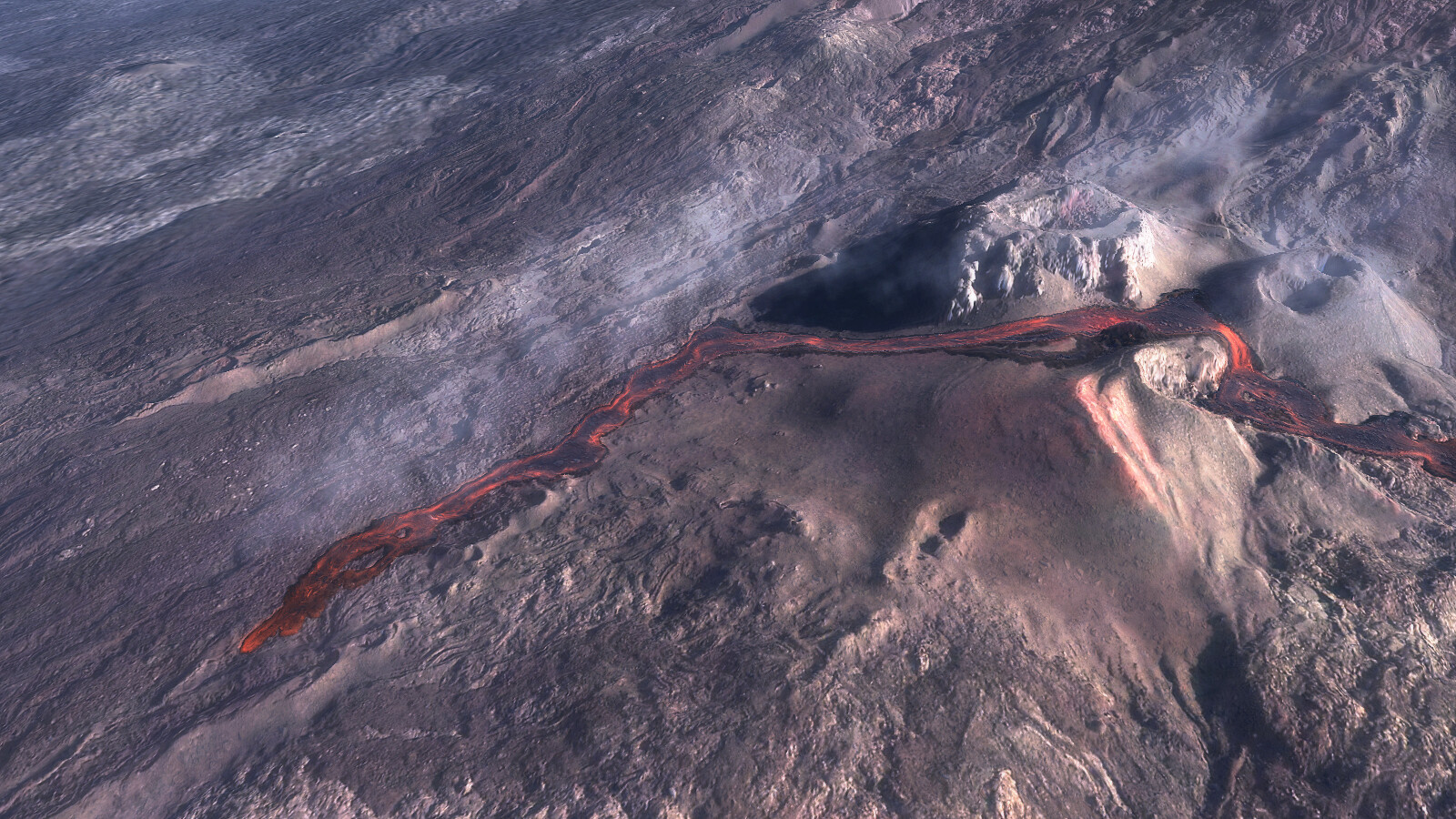
The project starts in early 2014, making graphics cards nearly as hot as the lava they were computing. New hardware allows adaptive tessellation and offers brand new compute shaders ! which makes everything possible. In November the simulator is installed at the museum on a dedicated large touch screen !
The installation is extremely well received, and the obvious next step follows : put the visitor inside the lava field with a VR headset. The Oculus Rift experience opens in August, for the museum’s first anniversary.
The engine is used for a scientific project : reconstructing the phreatomagmatic eruption that formed the Commerson crater roughly 1850 years ago, phase by phase, from the geological record.
The renderer is rebuilt for RTX and the current generation of graphics cards, adding ray tracing and real-time particles depth-sorting !
After ten years of museum installations, the simulator is
released publicly on Steam on 12 May, as
Volcano Simulator - Reunion Island. Anyone can now run on a laptop what
used to need a dedicated high end hardware !
See the Steam release →
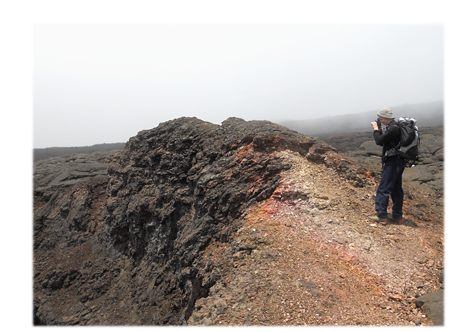
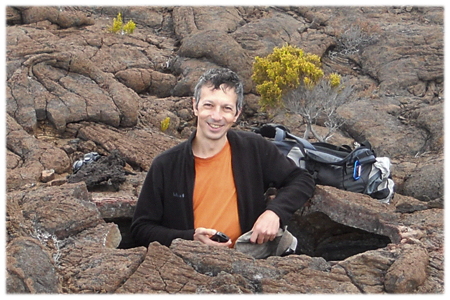
Eric photographing the crater that became the VR scenario — the ground textures and height maps come straight from shoots like this one.
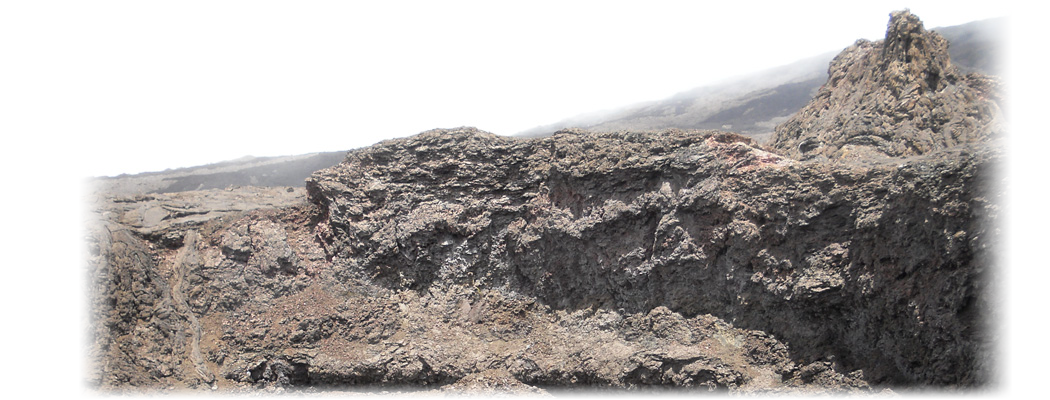
The real crater near the « Rosemont chapel », later rebuilt in 3D.